Yes! No. Maybe? Week 4 delivers reality check for UM, WMU; MSU OL overwhelmed
From Kalamazoo to East Lansing to Ann Arbor, it all broke bad on Saturday afternoon.
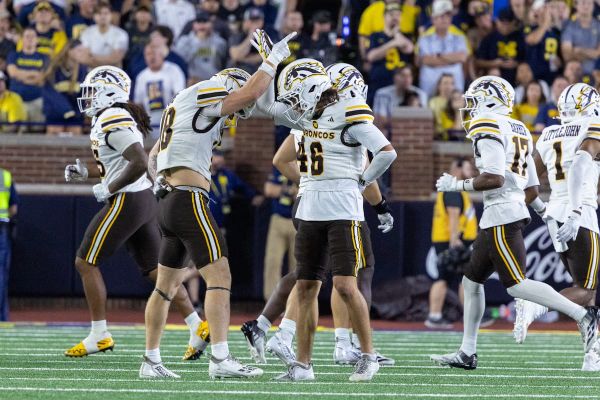
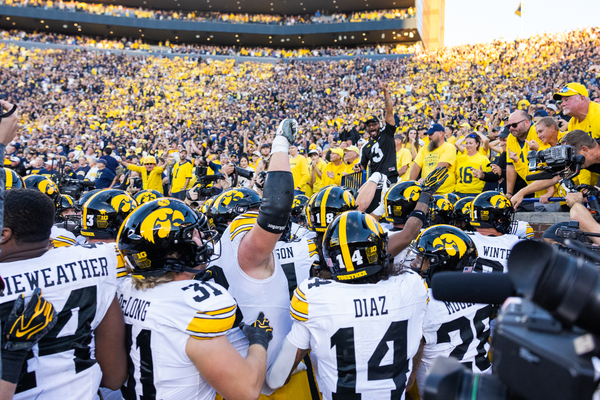
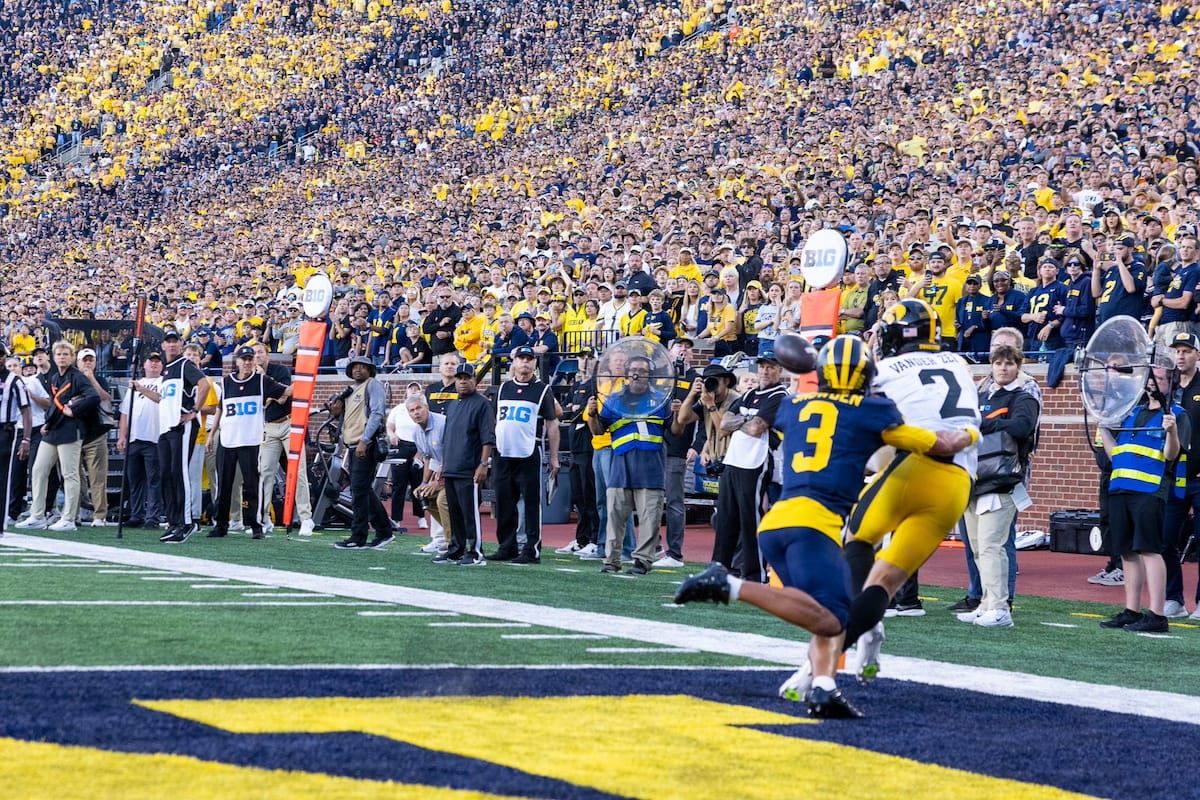
Western Michigan got rolled up by Boise State at Waldo Stadium, much as Michigan State did in its conference opener against Nebraska at Spartan Stadium. Michigan fumbled away a game against Iowa on a final play touchdown, squandering a day where the Wolverines vastly outperformed the Hawkeyes.
It leaves much to ponder and considering entering Week 4 and the bulk of conference play for all these teams. Elsewhere, Eastern Michigan rolled past Lindenwood, 29-3, and Central Michigan took the expected lumps in a 52-3 loss to Miami, though the Chippewas did lead 3-0 in the first quarter.
There's lots to get to good, bad and somewhere in between. Let's dig in.
Yes!
Eastern Michigan’s defense, pass rush: Yes, it’s an FCS team that EMU held to three points, but an FCS team beat EMU a year ago (as the non-P4 levels of the sport start to flatten out some, too). But any day with eight tackles for loss and four sacks where the opponents complete just 59 percent of pass attempts for 55 yards is a great day. Seven different Eagle defenders had sack contributions and a dozen got in on the TFLs. If this group can play with that disruptive streak in conference play, this defense has real “slam the door on opponents” upside.
Central Michigan’s passing game: If you had Central Michigan coming out with its best performance of the year (and one of the more accurate ones in program history) this week against Miami, quit lying no you didn’t. The Chippewas entered Hard Rock Stadium with the dead-last passing offense in the FBS. Then CMU’s trio of quarterbacks combined to go 21-of-26 for 137 yards. Jadyn Glasser, who threw a late pick trying to find the end zone on a last-ditch drive, led the charge with a 13-for-15 performance for 88 yards. CMU completed passes to 11 different receivers. It wasn’t one for the ages, but given the way it’d gone through three games and the strength of the opponent, CMU’s passing offense was basically all good on Saturday night.
JJ Buchanan and Andrew Marsh: Michigan’s got a real wideout tandem cooking here with the pair of sophomores. For the second-straight week they combined for more than 175 yards, both going over the 100-yard threshold this week. And their skillsets provide a nice complementary overlap. Buchanan is the more traditional outside-the-numbers X receiver with the versatility to work across the middle with his big frame. He’s got strong hands and is a big billboard of a target for Bryce Underwood. Marsh is more of a slasher, to borrow from basketball parlance, able to take a pass in space and carve upfield for extra yardage. He’s at his best settling in a zone or catching a pass on the run and getting upfield. He’s also got a good knack for sideline catches. It’s the best Michigan wide receiver pairing since… Jehu Chesson and Amara Darboh? Nico Collins and Donovan Peoples-Jones? It’s hard to say, but they’re damn good.
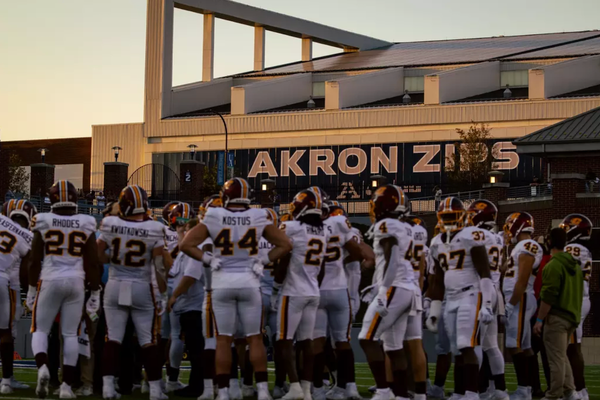
Benson Prosper: Without Nick Devereaux due to injury and Harold Mack returning from his own ailment (and finishing with six catches, 80 yards and a touchdown), Prosper soaked up 10 catches for 109 yards and a touchdown of his own on 13 targets. Quarterback Noah Kim looked his way often and the veteran wideout delivered. Prosper has been solid for EMU this year, and has largely been EMU’s No. 3 wideout when Devereaux and Mack are also on the field. But he showed Saturday in a win over Lindenwood that he can step into a much bigger role and deliver for the Eagles.
Zach Mowchan: After being injured for most of 2025, Mowchan has played like a man possessed to start the 2026 season, his final ride in college football. He’s spoken about playing in the reality of it being his last season and how that makes it easier to cut loose and play free. It’s showing up in games like Saturday when Mowchan led EMU with seven tackles, half a TFL and a quarterback hit. On the season, he’s EMU’s leading tackler with 43 and leads the squad with 2.5 tackles for loss. He’s been quietly anchoring so much of what’s going well for Eastern Michigan’s defense.
No.
Western Michigan’s defense: Western Michigan still ultimately has what is probably a pretty good defense and can show that through the duration of MAC play. But after about four plays on Saturday, it was pretty clear that Boise State was going to be the physical aggressor and could blow the WMU defense off the ball. The home team simply had no answers, be it personnel, scheme or blind luck. They ultimately bowed up and hung tough and made Boise State earn plenty of yards, but they couldn’t stop them. And Boise State stayed away from WMU’s corners, one big advantage for the home team, instead targeting tight ends against linebackers often with much success in the pass game. They didn’t crumble, but Western Michigan just didn’t have the goods to hang with Boise State’s offense, particularly the offensive line and tailback Dylan Riley.
Western Michigan’s offense: This is more about missed opportunities to keep the game within range and apply pressure. A first half drive ended with a missed field goal that could’ve made it 8-3 after Boise State opened with a touchdown and two-point conversion. Then WMU dropped a sure touchdown on the first drive out of halftime, trailing 15-0 at the time. As Lance Taylor noted postgame, make that field goal and score that touchdown and it’s 15-10 and a very different game where WMU can apply pressure. WMU also struggled to get into scripts where it could test Boise State’s suspect secondary downfield; wideout Aveion Chenault dressing out but not playing — he was questionable on the injury report — didn’t help the cause. The good news is WMU’s offensive line and run game should have much more success against MAC foes.
Michigan State’s offensive line: Losing Conner Moore mid-game didn’t help and it sounds like Luka Vincic and Ben Murawski are gritting through more minor dings. But this was just a bad, bad day by MSU’s offensive line. The group gave up six sacks (some of that is on Alessio Milivojevic, too) and the Spartans rushed for 39 yards on 32 carries, not aided by Cam Edwards’ injury. Remove his four carries for 16 yards and MSU had 28 for 23 net yards, which includes the negative yardage from sacks. Even adjusting for that, MSU’s offense got sunk by the state of the play up front, torpedoing most of what the Spartans wanted to do before it even had a chance to develop.
Michigan’s aversion to complete, complementary football so far: Here’s an eye-opening stat. Four games into his tenure as Michigan’s head coach, Kyle Whittingham’s team has three games with eight or more penalties. In the prior three seasons under Jim Harbaugh and Sherrone Moore, Michigan had two such games (h/t Anthony Broome). The offense was absent for a while this season, then it finally showed up on Saturday in a big way, only for questionable game management, a lack of execution in finer moments, suspect defensive play calling on Iowa’s game-winning drive and an unforgivable penalty total to doom Michigan in the end. It was by far the best and most complete game Michigan has played to date, but the Wolverines’ inability to get it all put together at once finally caught up as Michigan let Iowa steal a win.
Michigan State’s pass rush: The Spartans just don’t have much juice in this department. Kenny Soares is exciting but undersized on the edge and Eli Coenen and Ben Roberts have real go on the interior but those guys aren’t nearly enough to do it alone against P4 competition. In the first two games against MAC teams, MSU piled up six sacks, including four vs. EMU. In the last two games: One, including none on Saturday vs. Nebraska. The Spartans, be it via scheme or finding guys on the team with more pop, need to start affecting opposing passers or this defense could struggle again.
Maybe?
Jaz Patterson: Filling in for an injured Cam Edwards, Patterson looked good and was perhaps the lone bright(ish) spot as MSU got steamrolled on offense by Nebraska’s defense. Patterson has looked good in his role spelling Edwards, but with the star tailback for MSU missing much of the game, Patterson took 16 carries for 54 yards and a touchdown. It wasn’t easy running as Nebraska teed off on MSU’s offensive line, but he showed some patience and power to his game. While getting Edwards back is key for MSU’s highest offensive hopes, Patterson proved to be a capable fill-in.
Bryce Underwood: His down-to-down performance was probably the best it’s been at Michigan. He looked in control, comfortable and like he was seeing it well vs. Iowa’s defense, which is no small feat. It’s now back-to-back weeks where Underwood has felt like he’s commanding the offense within the play and not just a passenger for a ride. However, he had his blemishes. The interception (by one of his high school teammates at Belleville) is the obvious one, whether or not there was miscommunication between Underwood and his receivers. That cost Michigan a FG chance that could’ve staved off Iowa’s walkoff. He also tried to leap over the pile on a 4th and 1 and got sent back, rather than burrowing for a sneak. It’s a frustrating performance on the margins and because of the outcome, but the core of what Underwood’s done the last two weeks is very promising.
Michigan State’s bowl upside: Games against Wisconsin, Northwestern and UCLA appear to be far more difficult than they were prior to the start of the season (though some like Washington may be easier than previously thought) and that’s before considering a visit from Oregon, a trip to play at Michigan. MSU is better than Rutgers and Illinois appears beatable (though a Bret Bielema team might beat them up). Making a bowl at this point from a 2-2 record probably involves, at a minimum, beating Washington, UCLA, Illinois and Rutgers. And if MSU loses one of those games, they’ll need to beat one of Michigan, Oregon, Wisconsin or Northwestern. No easy path to six wins at this point, but it exists, narrowly.
Michigan’s overall upside: 3-1 and it feels karmically right, given the WMU debacle and beating an OU team that cannot play recognizably good offense, all while so much is not working for Michigan. The Wolverines are evidently getting better as respective units on the field; the passing game is better, the run game looks solid, the defense keeps making refinements (and needs to figure out end-game situations better) but things like penalties and some odd game management decisions keep hurting this team. It seems like the Wolverines have real upside to win something like 10 games, but it will never get there — or even come close — if the current moments of sloppy, undisciplined play keep happening.
Central Michigan, Eastern Michigan’s MAC chances: A week or two ago, this would’ve felt more grim. It’s still an uphill climb past Toledo, Ohio, Miami (OH) and Western Michigan, but both the non-Bronco Michigan MAC teams look like they have a recipe to hang tough and make some noise in the league. EMU can play defense to a far higher level than it could in 2025 and has a veteran quarterback. If the offensive line can come along and the receivers get healthy, the Eagles have real upside. And Central Michigan, finally showing something in the pass game to go with a solid rushing offense and what’s been a sturdy defense (when not facing Heisman candidates for Miami) the past few weeks can be one of the tougher outs in the league. Probably not pegging them for a conference title appearance, but they can firmly be in the race. EMU is already 1-0 in the league with a Week 0 win over Sacramento State.